Launa, Twice
Two portraits from one afternoon in 2007 that do not look like they came from the same room. The only variables were the light and the file.
She let it ride
Launa was a friend, and she was the easiest person I have ever photographed. Whenever I was in the mood to shoot, she was up for it. No negotiating, no scheduling around it, no persuading. That arrangement is rarer than good light and it is worth more.
Her photographs went into Ken Pond: A Decade of Visual Works, the book I published in 2008.
She basically let it ride.
One shoot, two pictures
East Elmhurst, 2007. Both of these frames come from the same afternoon — the same studio, the same camera, the same person, nothing rebuilt in between. What separates them is where I put the light, and what I did to the file afterwards.
Soft, on the charcoal
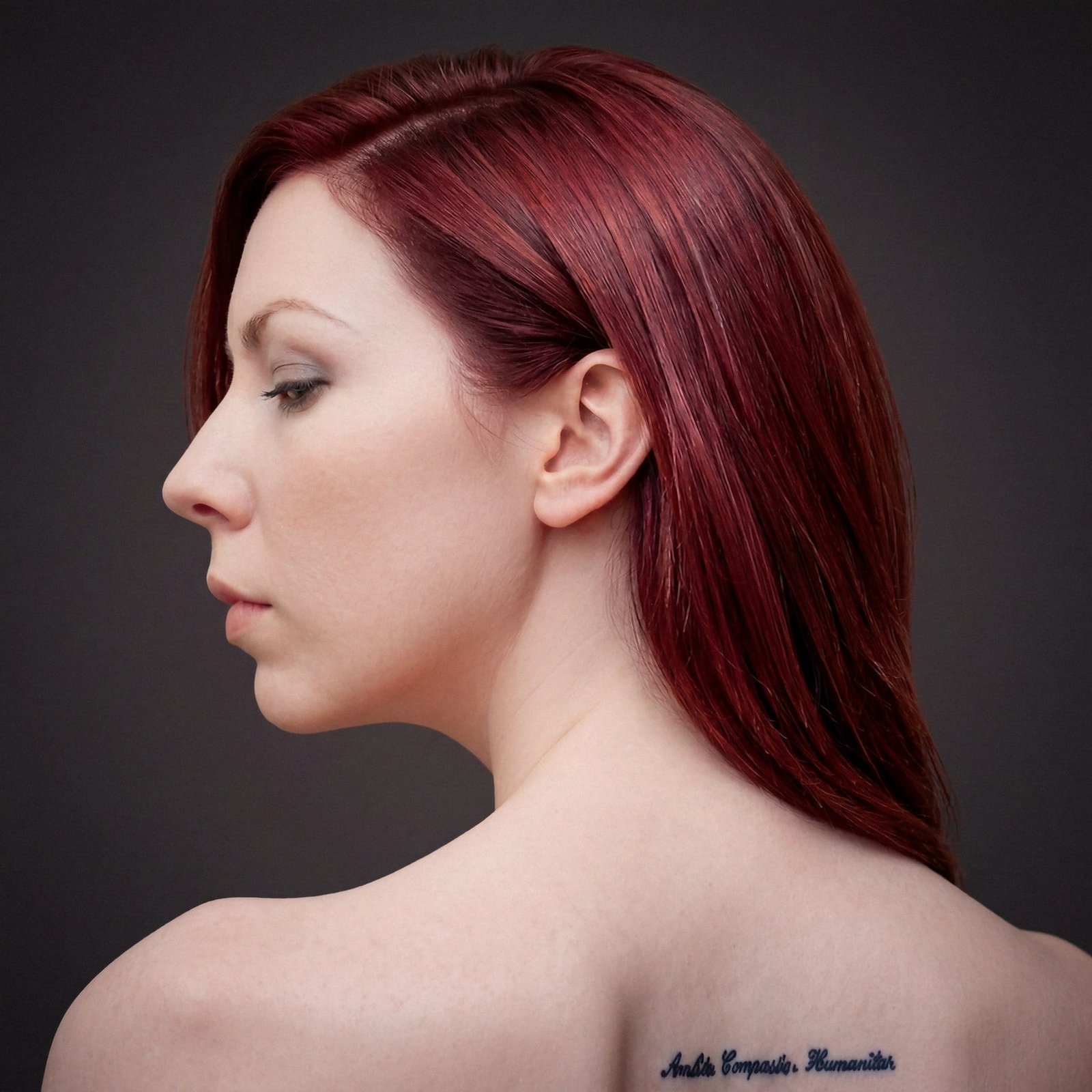
She is turned away from the camera with her face brought back round in profile, bare shoulders, against a dark grey ground. The light is soft and slightly cool, and it does almost nothing except describe her: the bridge of the nose, the line of the jaw, the edge of the ear, the red hair going almost black where it leaves the light.
Across her shoulder blade, in small script: Amicitia. Compassio. Humanitas. Friendship, compassion, humanity.
What the pose buys is two things at once. Looking back over a shoulder is a knowing look — it has attitude in it, because she has decided to turn round. But her back is bare and open to the camera, so she is unguarded in the same frame. Most portraits get to be one or the other.
Flash, as fill
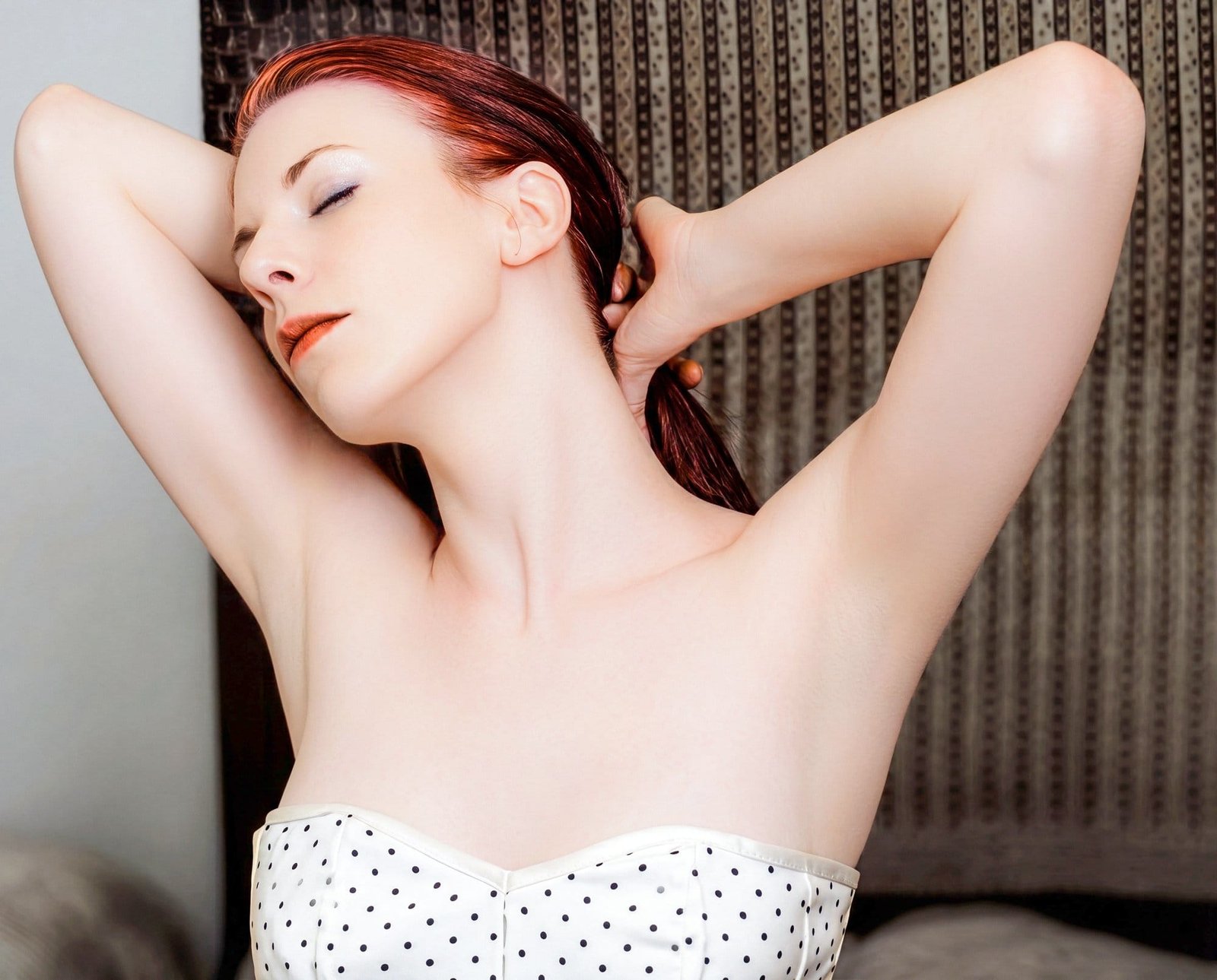
For the second picture I put a flash on her as fill. It does the opposite of the soft light: instead of rolling over an edge it finds every one and hardens it. Then I pushed the contrast and the saturation in Photoshop until the frame went stark and heavy.
It does not look like it came from the same session. Her skin goes from porcelain to lit, the background stops receding, and the picture takes on a weight the other one deliberately refuses.
Both choices were mine and neither was forced by the day. Soft and frontal reports what is there and gets out of the way. A flash used as fill is less a different setup than a different attitude towards the person standing in front of it. And the heaviness in the second frame is not something the room did — I added it afterwards, on purpose, once the shooting was over.
Same afternoon, same room, same camera, same face. The subject is not the variable.
The same afternoon