

Love Him Into a Better Version of Himself
How do you argue with a man who says he's acting out of love? A minister's answer, and the question she turned back on her own congregation.
Rev. Kristina Spaude began her sermon on Sunday, “Seeding a Future,” with a volcano. When Mount St. Helens erupted in May 1980, she told the Tri-County Unitarian Universalist congregation in Summerfield, scientists expected the land around it to stay barren for years, perhaps for generations. It didn’t. Pocket gophers and deer mice had lived through the blast underground, and saplings and root fragments under deep snow. Biologists call such places refugia: shelters where life holds on through a disaster, then spreads out and connects again. Spaude said she has been thinking of congregations the same way, as “little pockets of safety, resilience and protection.” Her next sentence went somewhere harder: “Which brings us to our enemies.”
Much of what followed came from How to Have an Enemy: Righteous Anger and the Work of Peace, by the Mennonite pastor Melissa Florer-Bixler, which Spaude quoted at length. In Florer-Bixler’s account, power is what turns a difference into enmity; an enemy is someone who uses power, actively or passively, to harm or dominate another. Spaude was careful to say that naming an enemy does not mean wishing one harm. “We can still treat them with dignity,” she said. “We might even go so far as to love them.” People who aren’t working toward a beloved community may help an enemy, she said, but without power they are opponents, not enemies, and the trickiest part may be learning to treat them all the same, opponents and friends, “because we can only liberate us all through our love.”
In the discussion after the sermon, Tim McCusker, who co-led the service, took that challenge out of the abstract and brought it home. He began with her message as he had heard it: the love we need is not just love for ourselves, but for our “perceived, almost, enemies.” Then he asked about Rev. Paul Harsh, pastor of First Baptist Church of Lady Lake, whose public remarks McCusker had recently challenged at a Lady Lake Town Commission meeting.
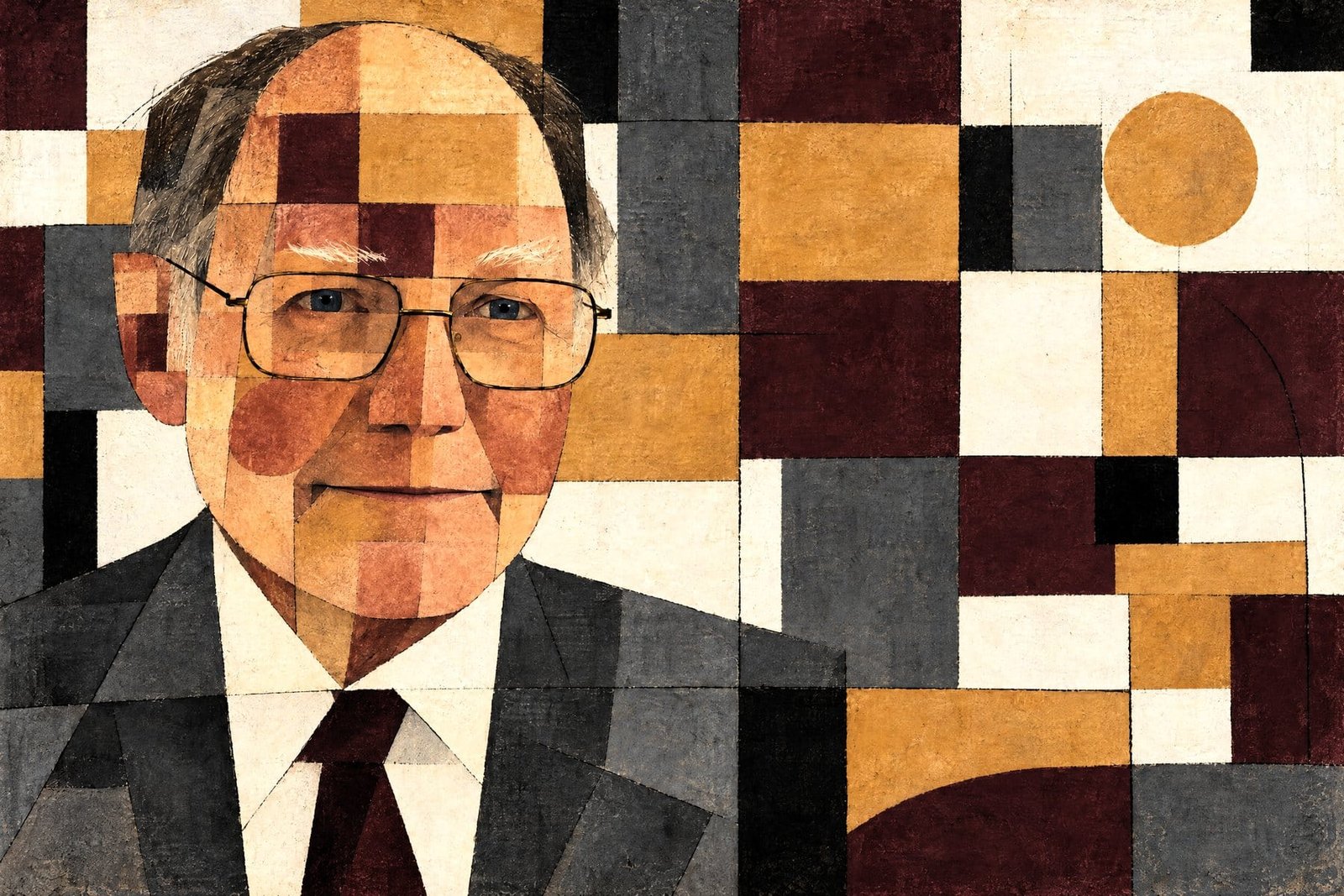
For more than a year, Harsh has used the commission’s public-comment period to protest the town’s Pride Month proclamations and to criticize Commissioner Treva Roberts, who is gay. In July 2025 he called homosexuality an “abomination,” and Villages-News.com quoted him as saying, “We never had this until we had a homosexual member.” At the next meeting, Roberts answered him: “Mr. Harsh, you have professed to love everyone, but you have demonstrated you do not.”
In early October 2026, Harsh told the commission that the mayor and Roberts were “essentially the moral decline of Lady Lake.” Later in the same meeting, after another speaker called being gay or transgender a mental illness, Roberts walked out. At the next meeting McCusker was among the supporters who spoke, telling the commission that Harsh’s comments had “crossed the line.” Harsh is still in the town’s rotation of local pastors who give the opening prayer at commission meetings. His most recent turn was on November 2.
THE CONSCIENCE PROBLEM
McCusker built his question on Harsh’s stated motive. Harsh, McCusker said, speaks out of what Harsh calls “a love of the people,” because he believes that gay people who live openly will “eventually end up burning in hell.” McCusker does not agree with him. “But for those of us who don’t agree and want to disagree, how should we do that,” he asked, “understanding that he is, in his mind, you know, demonstrating love by doing what he’s doing?”
It is the hardest kind of disagreement. When someone admits to hostility, naming it is simple. When someone believes his condemnation is an act of rescue, the argument is no longer only with his words; it is with a conscience convinced of its own righteousness.
HER ANSWER
Spaude took the question with a joke. “Thanks for throwing me a softball,” she said, and then explained why she finds Harsh’s frame of reference “deeply problematic.” The trouble begins with how little anyone can know. Her Unitarian and Universalist ancestors, she said, have been “speaking into the ether” for a long time about an idea she shares: no human picture of God can be as large as God, because we have “tiny little minds and can only think so much.” Such a picture, she said, “doesn’t say anything about God; it only tells us about ourselves.”
Her own tradition removes the threat altogether. “As Universalists, we don’t believe in hell,” she said, and that takes hell out of the equation “from the get-go.” Universalism, one of the two traditions that merged in 1961 to form Unitarian Universalism, historically taught that all people would ultimately be reconciled with God. Without hell, the warning McCusker described has nothing to warn against.
She did not rest her case on her own tradition. The scriptures Harsh preaches from, she said, also teach that we are all made “in the likeness and image of God.” If God knows us when creating us, she asked, “how could we be wrong?” Roberts had told Harsh much the same thing in August 2025: “I am exactly who God made me to be.” Separated by town lines and more than a year, a commissioner defending herself and a minister answering her congregation reached for the same idea.
THE TURN
The sharpest part of Spaude’s answer was where she placed the burden of love. McCusker had asked how to argue with a man who says he acts out of love. Spaude spent most of her answer on why she rejects Harsh’s reasoning, then turned the question back on the room. The test of love she offered was not for Harsh. It was for the people listening.
Rather than writing Harsh off, she left the door open. “So for me, the thing is that we need to try to love him into a better version of himself,” she said. “We all have room for improvement, right?”
Earlier that morning, near the end of her sermon, she had told the congregation that not every seed they send out will take. “Sometimes it may feel like we’re throwing them straight into the lava,” she said, “but we need to let them out into the world all the same.”
The short version
- At Tri-County Unitarian Universalists in Summerfield, Florida, on November 8, 2026, Rev. Kristina Spaude preached “Seeding a Future,” a sermon about refuge and about treating enemies with dignity, even love.
- Afterward, service co-leader Tim McCusker asked how to disagree with Rev. Paul Harsh, a Lady Lake pastor who has spent more than a year criticizing the town’s Pride Month proclamations and Commissioner Treva Roberts, and who, McCusker said, speaks out of love.
- Spaude rejected Harsh’s reasoning: no human idea of God can be as large as God, her tradition does not believe in hell, and scripture says everyone is made in God’s image. Then she put the test of love to her own congregation: “We need to try to love him into a better version of himself.”
Sources: the Tri-County Unitarian Universalists service of November 8, 2026 (video), and Villages-News.com coverage of the Lady Lake Town Commission from July 2025 to November 2026. Disclosure: Ken W. Pond is the congregation’s webmaster, and Rev. Kristina Spaude is his partner.